
I f you own a brick home in Barrington, Lake Forest, Bull Valley, or Crystal Lake, you’ve probably heard the terms tuckpointing vs repointing and brick replacement used interchangeably. While they all involve repairing masonry, they’re not the same thing and knowing the difference can save you time, money, and stress.
At Chimney Repairs & Masonry Construction, we help homeowners restore their brickwork so it looks beautiful and lasts for decades. Here are the differences between these three methods and when each one is the best choice.
What is Repointing?

Repointing is the process of repairing or renewing the mortar joints between bricks that have cracked, crumbled, or weathered away over time. Mortar serves as the glue that holds your brickwork together, and when it starts to deteriorate, the wall loses both strength and water resistance.
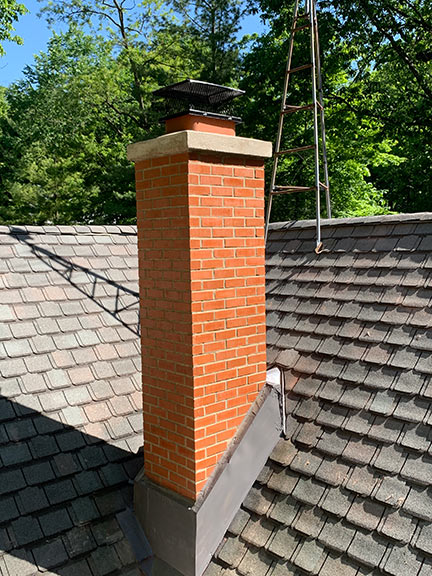
During repointing, a mason carefully grinds or chisels out the damaged mortar to a uniform depth, cleans the joint, and then fills it with fresh mortar that closely matches the original in color, texture, and composition. The goal is not just to make the wall look better, but to restore its structural integrity and seal out moisture that can cause further damage inside the wall or chimney.
Repointing is typically needed every few decades, depending on the quality of the original mortar and exposure to the elements. It’s one of the most effective ways to extend the lifespan of your brickwork, especially in climates like northern Illinois, where freeze-thaw cycles and moisture are constant threats.
WHEN IT’S NEEDED:
-
-
You can see cracks or gaps in the mortar lines.
-
The bricks are still in good shape, but the joints are falling apart.
-
There is a white, powdery “efflorescence” on the wall.
-
Repointing is a structural repair. It strengthens your masonry and stops water from getting inside.
What is Tuckpointing?
 Tuckpointing is both a structural and aesthetic brick restoration technique designed to make mortar joints look crisp and refined. The process involves applying two different colors of mortar: one that matches the brick and another that forms a thin, contrasting line down the center of the joint. This creates the illusion of narrow, perfectly finished joints—making even older walls look newly built.
Originally developed in England during the 18th century to imitate the look of high-end rubbed brickwork, tuckpointing remains popular today for historic homes and decorative facades. While it does reinforce mortar joints to some extent, tuckpointing’s true value lies in its visual appeal—it restores symmetry, precision, and curb appeal to aging brickwork.
For many homeowners in Lake Forest or Bull Valley, tuckpointing is a preferred option when the brick structure is still sound but the appearance has faded due to staining, weather, or wear. It can dramatically enhance your property’s character and add value while maintaining authenticity.
WHEN IT’S NEEDED:
-
You want your brick to look clean and uniform again
-
You’re restoring an older home or chimney
-
Mortar is damaged, but bricks are mostly intact
Tuckpointing improves both curb appeal and weather resistance. It’s a perfect blend of form and function.
What is Brick Replacement?

Sometimes the damage extends beyond the mortar joints—when the bricks themselves are spalling, cracked, or disintegrating, brick replacement becomes necessary. Repointing or tuckpointing can’t fix bricks that have already failed, and leaving them in place risks spreading damage to surrounding areas.
Brick replacement involves carefully removing the damaged brick and replacing it with one that matches the existing structure in size, color, and texture. Skilled masons then repoint the surrounding mortar joints so the repair blends seamlessly. Done correctly, you shouldn’t be able to tell which brick was replaced.
This process restores both appearance and structural stability, preventing further water intrusion, heat loss, and foundation stress. For homes in Algonquin and Barrington, where moisture and freeze-thaw conditions accelerate brick decay, timely brick replacement can prevent costly wall or chimney rebuilds down the road.
WHEN IT’S NEEDED:
-
Bricks are loose or flaking (spalling)
-
Large sections of wall or chimney have visible cracks
-
Water is leaking through bricks, not just mortar
Brick replacement prevents further deterioration and protects your home’s foundation, chimney, and exterior walls from costly structural damage.
Why it Matters for Homes in Barrington, Lake Forest & the Fox Valley
Illinois weather is tough on masonry. Between freeze-thaw cycles, humidity, and salt exposure, brick and mortar naturally expand and contract—causing cracks that let in water.
Left untreated, these small cracks can lead to major structural problems, from chimney leaning to foundation settling.
Regular masonry maintenance, especially repointing or tuckpointing, can extend the life of your brickwork by 50+ years, saving you from costly rebuilds.
4 Reasons to Choose Chimney Repairs & Masonry Construction
Our team has decades of experience in brick restoration, chimney repair, and masonry preservation throughout Barrington, Algonquin, Lake Forest, Bull Valley, and Crystal Lake.
We specialize in color-matching mortar, blending new brick with old, and restoring the beauty of your home or chimney—so it looks like it’s always been that way.
.