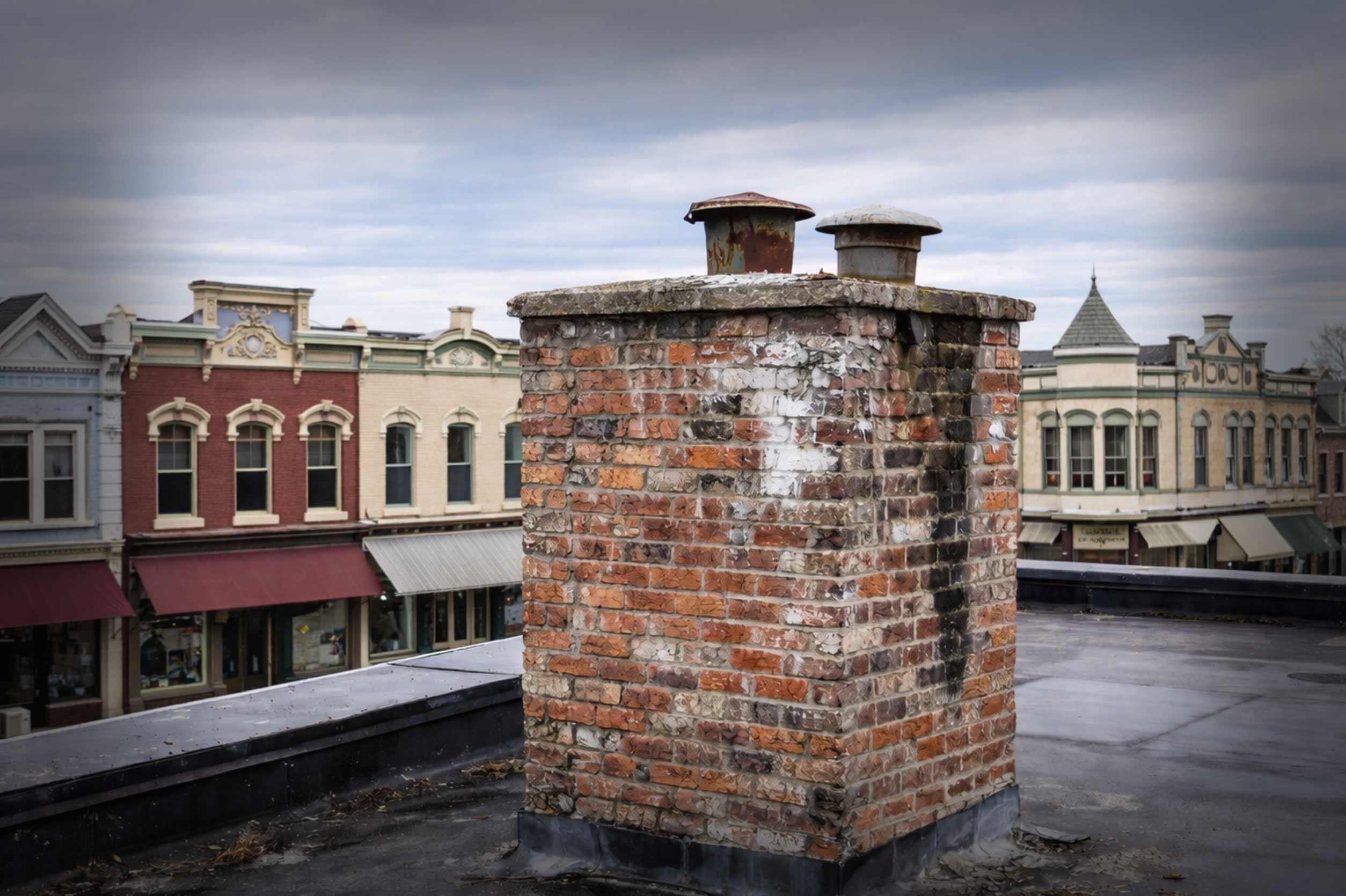
If you own or manage a commercial property in Barrington, IL, chimney maintenance is not just about performance, it’s about safety, liability, and staying compliant with local requirements.
Many property owners assume chimney inspections are optional, but depending on your building type, fuel system, and usage, regular inspections may be necessary to prevent serious risks and costly repairs.
Whether your property is in Barrington, Inverness, Lake Forest, Bull Valley, or Crystal Lak understanding when and why chimney inspections are needed can help you avoid unexpected issues.
When Are Chimney Inspections Required for Commercial Buildings?
Commercial chimney inspections are often required or strongly recommended in the following situations:
-
Restaurants with wood-burning ovens or fireplaces.
-
Multi-unit residential or mixed-use buildings
-
Office buildings with heating systems connected to chimney structures
-
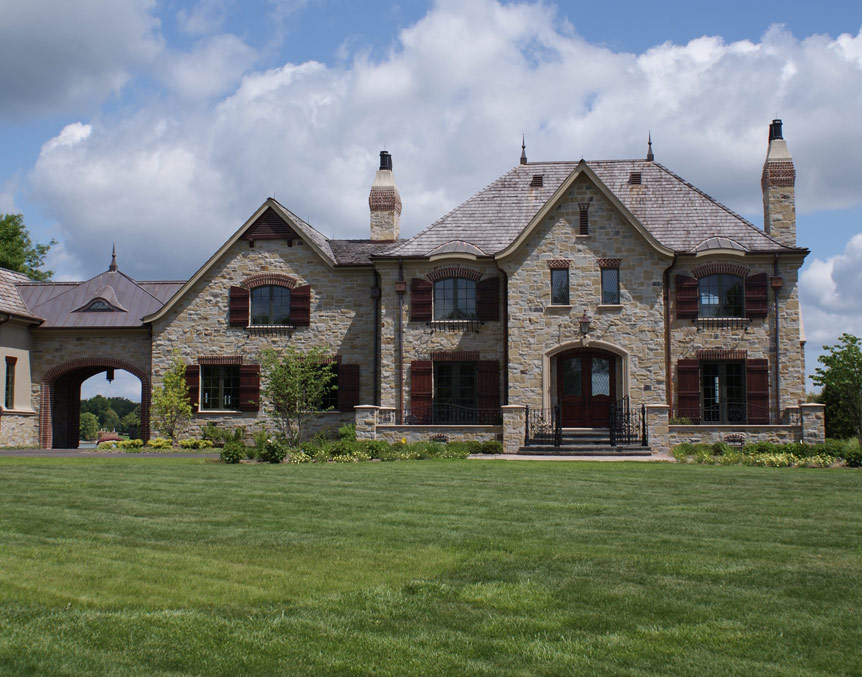
Historic properties common in Lake Forest and Inverness
-
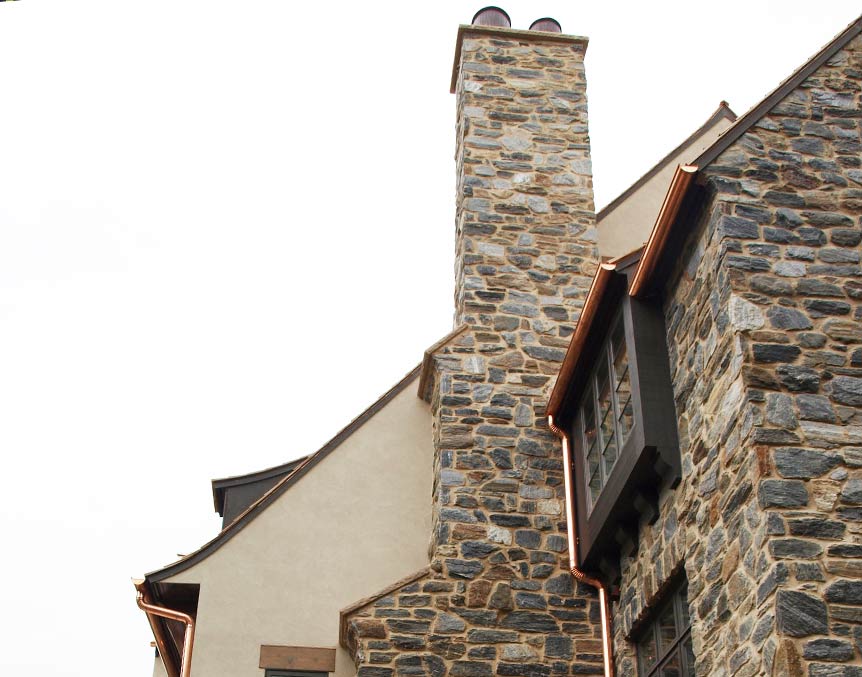
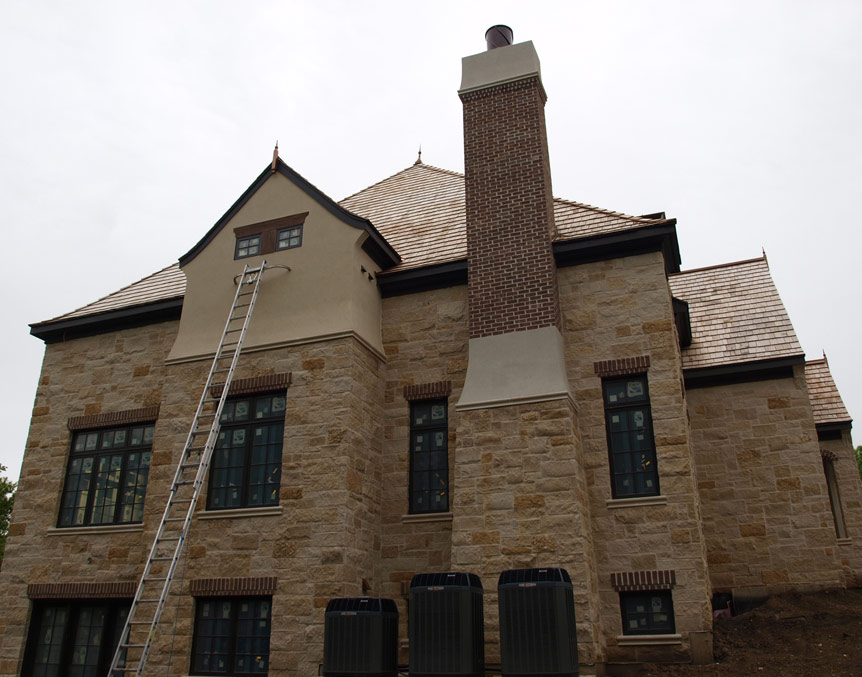
Buildings with older masonry chimneys exposed to Midwest weather
In many cases, insurance providers and local codes may require documentation of routine inspections, especially for liability protection.
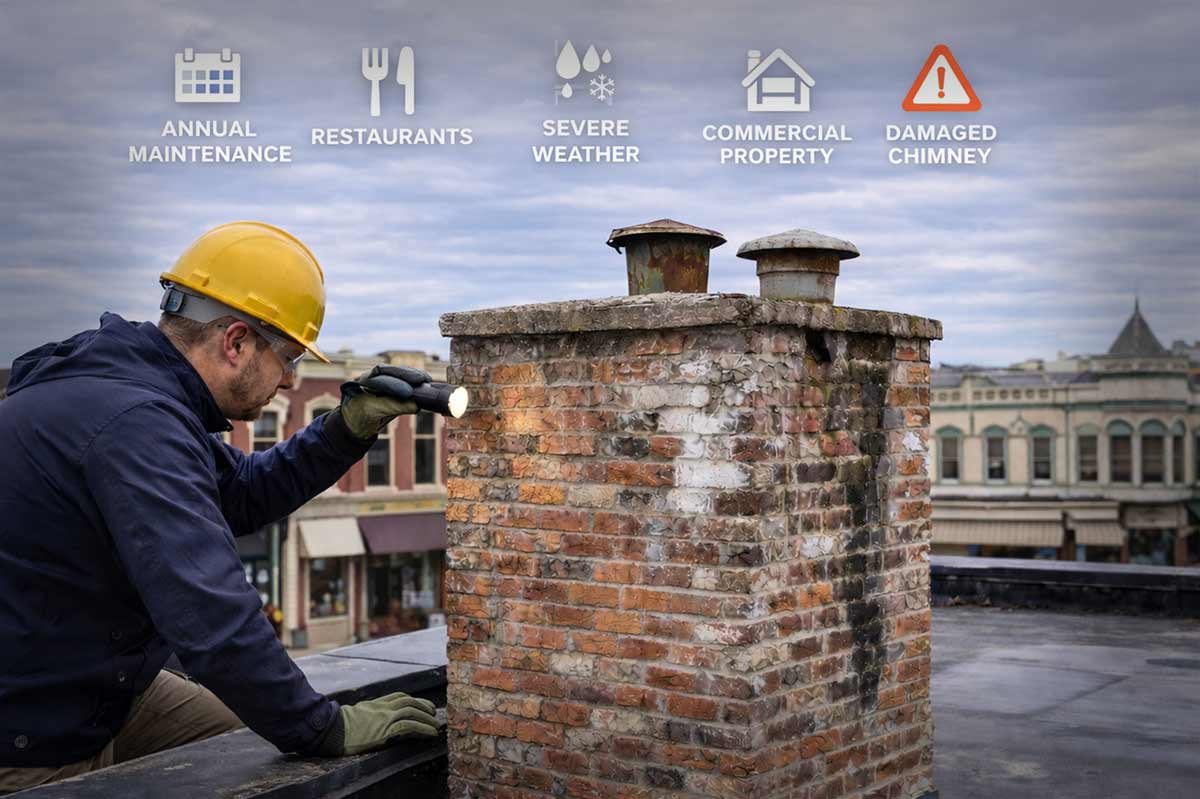
How Often Should a Commercial Chimney Be Inspected?
For most commercial properties, chimney inspections should be completed on a regular, preventative basis—not just when problems appear. Routine inspections help identify early signs of deterioration before they turn into costly structural repairs or safety hazards.
IN GENERAL, CHIMNEY INSPECTIONS SHOULD BE COMPLETED:
-
At least once per year as part of routine building maintenance
-
More frequently for high-use systems such as restaurants or commercial kitchens
-
After severe weather events, including heavy rain, snow or freeze-thaw cycles
-
When buying or leasing a commercial property
-
If there are visible signs of damage or performance issues.
Barrington-area properties are especially vulnerable due to seasonal temperature swings. The constant expansion and contraction of masonry materials can lead to cracking, mortar deterioration, and water intrusion over time.
By staying proactive with inspections, property owners in Barrington, Inverness, and Lake Forest can extend the lifespan of their chimney systems, reduce long-term chimney repair costs, and ensure their building remains safe and compliant year-round.
What Happens If You Skip a Chimney Inspection?
Delaying or skipping chimney inspections can lead to serious, and often preventable, problems. What starts as minor wear or hidden damage can quickly escalate into safety hazards, structural issues, and costly repairs if left unaddressed.
For commercial properties, these risks are amplified due to higher usage, larger systems, and increased liability.
-
Fire hazards caused by creosote buildup, flue blockages, or compromised chimney liners
-
Carbon monoxide leaks resulting from poor ventilation or damage due to flue systems
-
Structural instability that can lead to partial chimney collapse or unsafe conditions on the roofline
-
Deteriorating brick and mortar from water penetration
-
Failed building inspections during property sales, lease renewals, or code compliance checks
-
Insurance complications or denied claims due to lack of documented maintenance
In climates like Barrington, Inverness, and Lake Forest, where freeze-thaw cycles are common, even small cracks can rapidly worsen over a single season. Water intrusion followed by freezing temperatures can expand existing damage, turning minor repairs into major restoration projects.
For commercial property owners and managers, these issues don’t just affect the building, they can disrupt business operations, create safety concerns for tenants and customers, and expose you to significant liability.
Staying proactive with routine chimney inspections helps protect your investment, maintain compliance, and avoid unexpected downtime or emergency repairs.
Signs Your Commercial Chimney Needs Immediate Attention
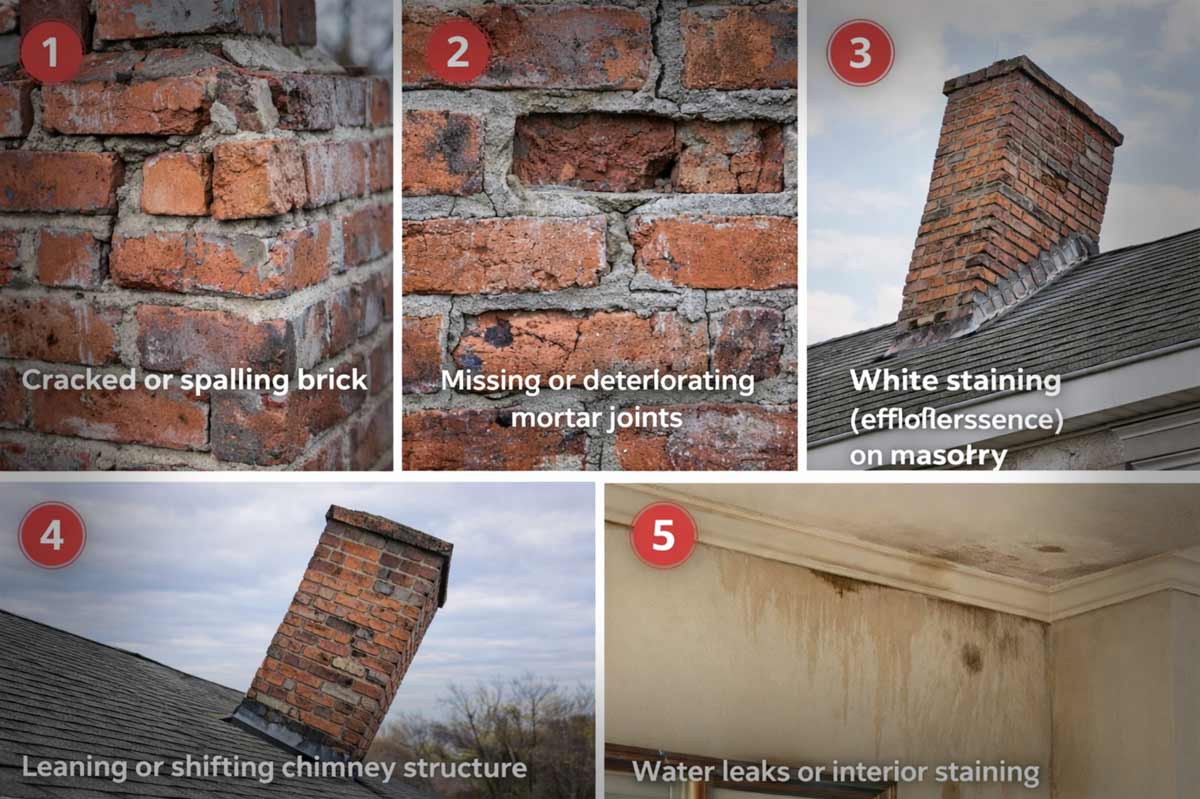
If you notice any of the following, it’s time to schedule a professional chimney inspection before minor issues turn into more extensive damage:
-
-
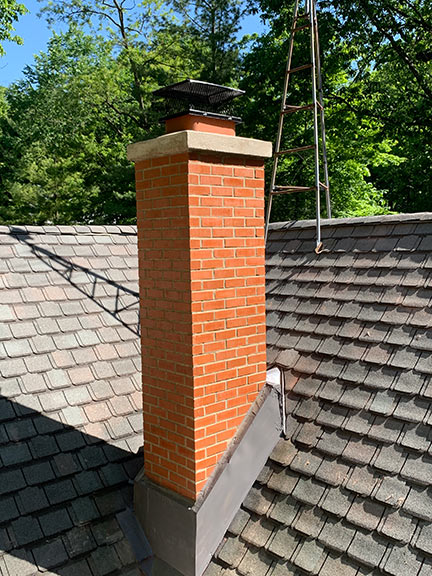
Cracked or spalling brick, which can indicate moisture intrusion and surface breakdown
-
Missing or deteriorating mortar joints, reducing the structural integrity of the chimney
-
White staining (efflorescence) on masonry, a sign that water is moving through the brick and masonry repairs are needed.
-
Leaning or shifting chimney structure, which may point to foundation or structural instability
-
Water leaks or interior staining near chimney areas, often indicating flashing or masonry failure
-
These issues are common in older buildings throughout Barrington, Inverness, and Lake Forest, especially after winter. Addressing these issues early not only helps preserve the structure of the chimney but also prevents more costly repairs, safety concerns, and potential disruptions to your building or business operations.
.
What’s Included in a Professional Chimney Inspection?
A professional commercial chimney inspection typically includes:
-
Full flue and ventilation system evaluation
-
Exterior masonry inspection
-
Chimney crown and cap assessment
-
Moisture and water damage check
-
Structural stability review
This process helps identify both visible damage and hidden issues before they turn into major repairs.
What Impacts the Cost of a Commercial Chimney Inspection?
Understanding what goes into the cost of a commercial chimney inspection can help property owners plan ahead and avoid unexpected expenses. Pricing can vary based on several key factors:
.
In general, commercial chimney inspections in Barrington, Inverness, and Lake Forest can range from a few hundred dollars to more for larger or more complex systems.
However, compared to the cost of major masonry repairs, structural damage, or liability risks, an inspection is a relatively small investment that helps prevent significantly higher expenses down the line.
.
Commercial Chimney Services in Barrington, Inverness & Lake Forest
At RB Chimney Repairs & Masonry Construction, we work with commercial property owners and managers throughout Barrington, Inverness, and Lake Forest to keep chimney systems safe, functional, and compliant.
We understand the unique challenges of maintaining masonry chimneys in the Chicago area climate, from freeze-thaw damage to long-term moisture exposure, and provide thorough inspections, repairs, and restoration services tailored specifically to commercial buildings.
Whether you’re managing an office property, restaurant, multi-unit building, or retail space, staying ahead of chimney issues can help you avoid costly repairs, safety risks, and disruptions to your business.
.
Schedule a Commercial Chimney Inspection
If you own or manage a commercial building in Barrington, Inverness, or Lake Forest, now is the time to take a proactive approach.
Schedule your commercial chimney inspection today to identify potential issues early, protect your property, and ensure your building remains safe and compliant year-round.
FAQ SECTION
Do commercial buildings need annual chimney inspections?
Yes, most commercial buildings should have their chimneys inspected at least once per year, especially if they are actively used or connected to heating systems.
Who is responsible for chimney maintenance in a commercial property?
Responsibility typically falls on the property owner or landlord, although lease agreements may assign certain responsibilities to tenants.
How much does chimney repair cost in Barrington, IL?
Costs vary depending on the extent of damage, but minor repairs may cost a few hundred dollars, while major structural repairs can cost several thousand.
Can a damaged chimney fail a building inspection?
Yes, structural damage, ventilation issues, or safety hazards can cause a building to fail inspection, delaying sales or occupancy.